3D Printing: February 2020

We begin our tour of the 3D printing industry this month with an additively manufactured concept car. Local 12 reports on LOCI, a fully 3D printed concept car developed by Berlin-based BigRep. Every component, down to the tires, of this batmobile-looking concept car, have been 3D printed. Indeed, even the largest part of the car, which “measures 1000 x 600 x 700 mm, was fully 3D printed in one piece.”

While LOCI is only a prototype for now, BigRep believes their concept car “can point to the future where vehicles are created in large 3D printing machines instead of standard factories.”

Traditional forms of car manufacture are time-consuming, and entire factories have to be set to create a new car. However, with the wonders of 3D printing, this entire process can be revolutionized.

As BigRep’s Chief Innovation Officer Daniel Buening explains: “the vehicle consists of only 14 3D printed parts. The development, from an idea to a finished project, took only 12 weeks.”

BigRep also envisions further instant personal vehicle customization when 3D printing becomes a vital part of the automobile manufacturing process. Buening elaborates: “tall people could order cars with slightly more head space in the cockpit and people with disabilities could ensure their cars were more suited to their needs. This also means you can design and produce faster. You can print the parts you need on-demand. You can also look at the sustainability aspect: moving spare parts around the world won’t be needed if you produce them locally in the factories instead of flying them across the world.”

Elsewhere, 3D Printing Media Network reports from boot Dusseldorf, where JAMADE Germany has just recently announced AMAZEA, the first serially 3D printed underwater scooter.

JAMADE Germany, which is “a company focused on the development and production of electrically powered sports equipment, developed and serially produced the AMAZEA underwater scooter using large format extrusion 3D printing technology. This marks a significant new era for digital mass production, as the AMAZEA will feature impressive 75% 3D printed parts, which actually make the device impossible (or very difficult) to produce by any other manufacturing method.”

AMAZEA’s body and front parts are produced “on three BigRep ONE large-format 3D printers using engineering-grade materials. With the exception of the Olli autonomous vehicle, this is the first time an end-use product this large is produced largely by 3D printing. The greater availability and lower costs of both large-format 3D printers and durable 3D printable materials is going to continue to enable a new generation of digital products.”

JAMADE Founder and Managing Partner Janko Duch explains: “AMAZEA is an industry-first breakthrough with the potential to redefine maritime vehicle technology and the consumer experience in water sports around the world. We opted for the BigRep ONE due to its cost efficiency, accuracy, and quality when compared to the extremely high investment for traditional tools, particularly in the first year’s lower quantity.”

AMAZEA “pulls the diver attached to it forward through the water, is an environmentally friendly, emission-free, and low-noise method of exploring marine life without disrupting the eco-system.”

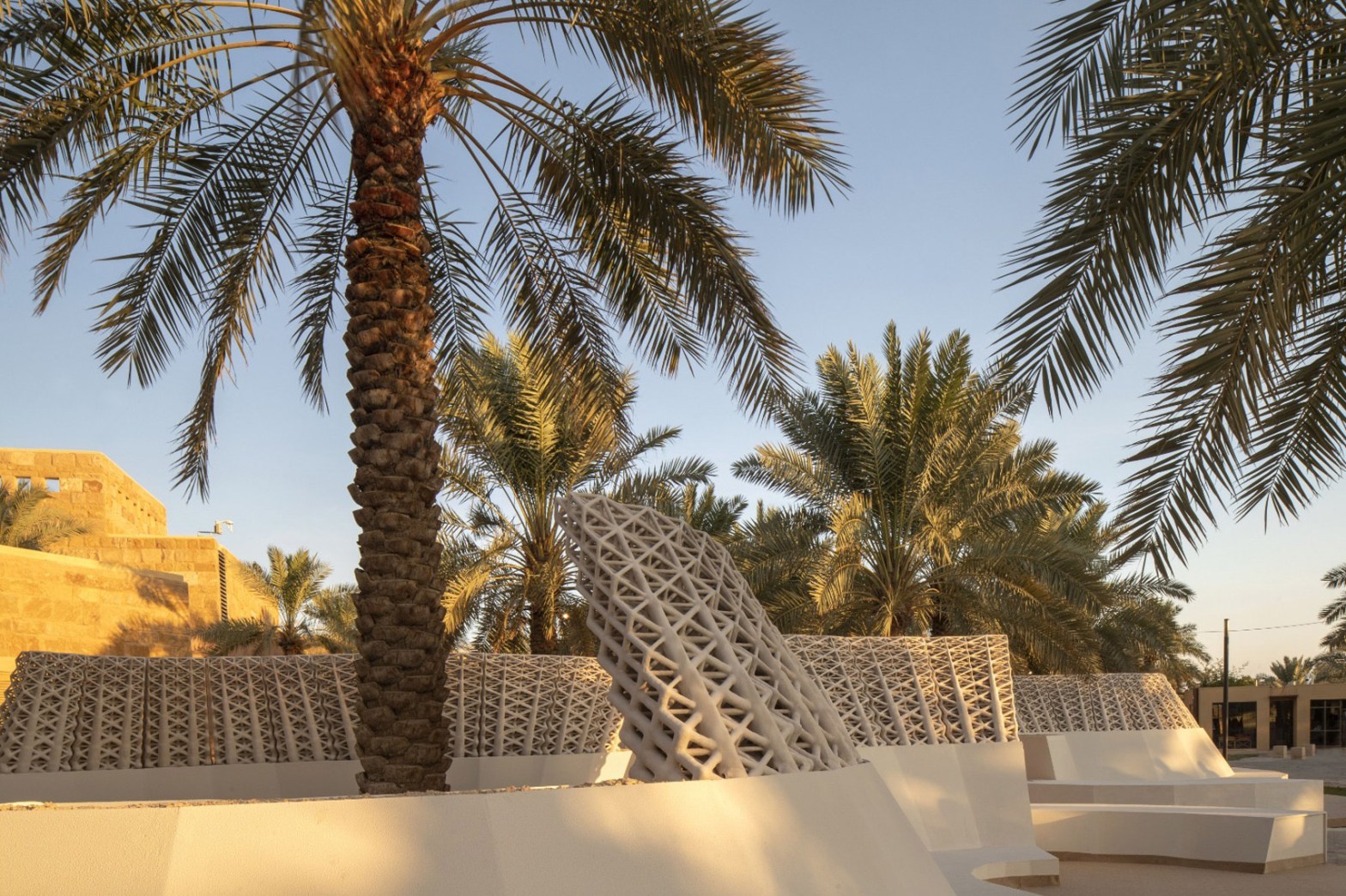
In the design world, Dezeen reports on yet another pavilion getting 3D printed in Saudi Arabia. Only this time, it was created using sand.

This “sustainable sand-printed installation called Sandwaves” is located in Diryah, Saudi Arabia specifically and was created by architects Chris Precht and Arthur Mamou-Mani.

“The ribbon-like structure is 3D printed from sand and furan resin for use as street furniture at Diryah Season – a sports and entertainment event in the Al-Turaif District.”

The architects chose sand due to the fact “it is the most abundant natural material in the country, and it also responds to local building traditions.” With this 3D printed art installation, the pair of architects “hope to demonstrate the kind of innovation needed for our time in the building industry, and how nature and technology can work harmoniously together.”

As Mamou-Mani elaborates: “we both believe in the cradle-to-cradle approach to design, using materials which can go back to their natural state, leaving no trace.” To Precht, “building in an ecological way also means to build with local materials.” Mamou-Mani concludes: “we asked ourselves what is the most common raw material around, so sand came naturally to our minds.”

Sandwaves, which comprises “58 individual 3D printed elements which combine to form the continuous ribbon,” is the “largest sand-printed installation to date.” The architects collaborated with engineers at Format, “who used parametric design tools to generate the optimum shape and thickness of each piece.”

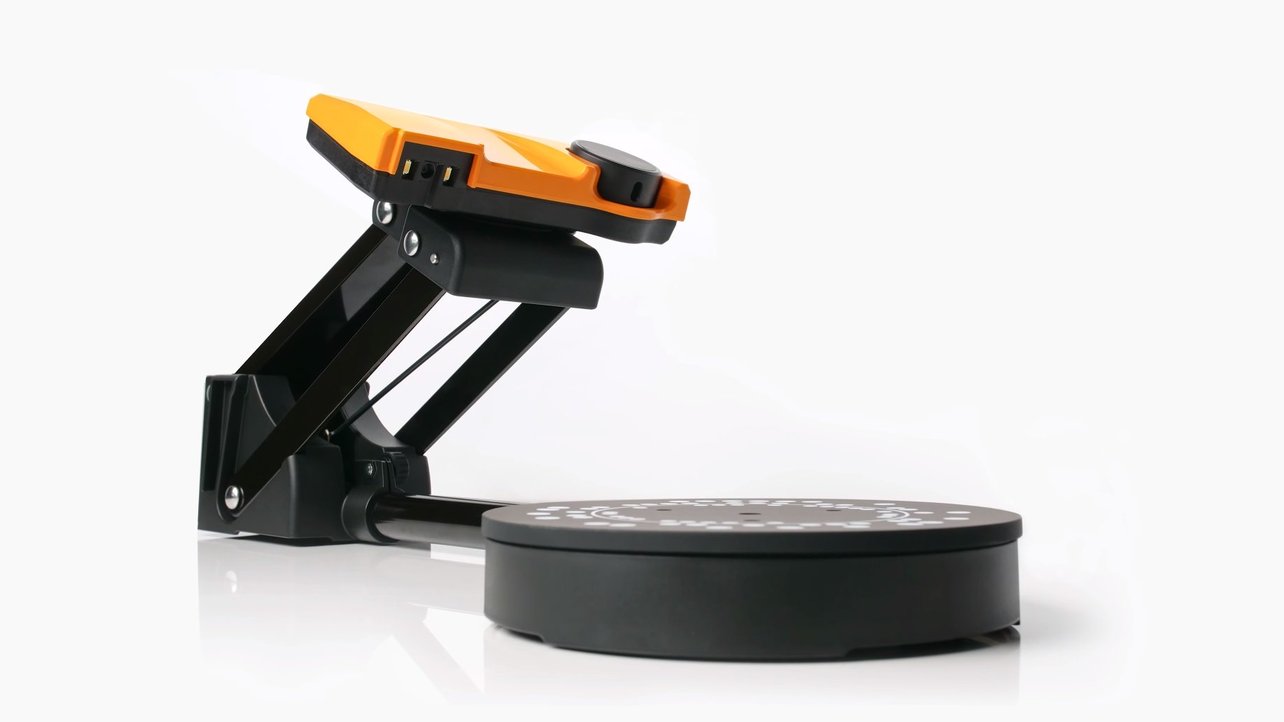
Finally, 3D Printing Industry reports Scan Dimension, a 3D scanner developer “with offices in the US and Denmark, has announced an update to the software for its SOL 3D scanner.”

With this update, Scan Dimension is providing “a number of new and improved features for the scanner, including improved scanning speed, and support for the latest macOS Catalina 10.15.”

Scan Dimension’s Head of Global Marketing, Global Scanning Rune Steenberg explains: “our engineers are continually advancing the SOL 3D scanner, and our customers will appreciate the faster scanning speed and support for macOS Catalina.”

“The latest update is making it easier than ever for SOL users to share, print, or save their projects for future use.”

Scan Dimension, a subsidiary of Global Scanning A/S, which is “a Danish manufacturer of scanning technologies. Global Scanning A/S primarily develops large-format scanning solutions for the computer-aided design (CAD), geographic information systems (GIS), reprographic products, copy services, and document archiving segments through its various companies,” is itself “a provider of 3D scanners, imaging, and realization technology, It provides its scanning solutions to customers in a number of industries, including construction, engineering, manufacturing, makers, and more.”

Scan Dimension introduced the SOL 3D scanner in April of 2019. “The system is designed to be easy to use and intuitive, intended for the everyday maker, technology enthusiast, and hobbyist.”

As Global Scanning A/S’s CEO Graham Tinn concludes: “we created the SOL scanner to make 3D scanning approachable for everyone. SOL empowers anyone to unleash their creativity and explore the infinite possibilities of 3D technology actualization.”

The 3D printed world keeps spinning…

Image Courtesy of Local 12 and BigRep

Quotes Courtesy of Local 12, BigRep, 3D Printing Media Network, Dezeen, and 3D Printing Industry
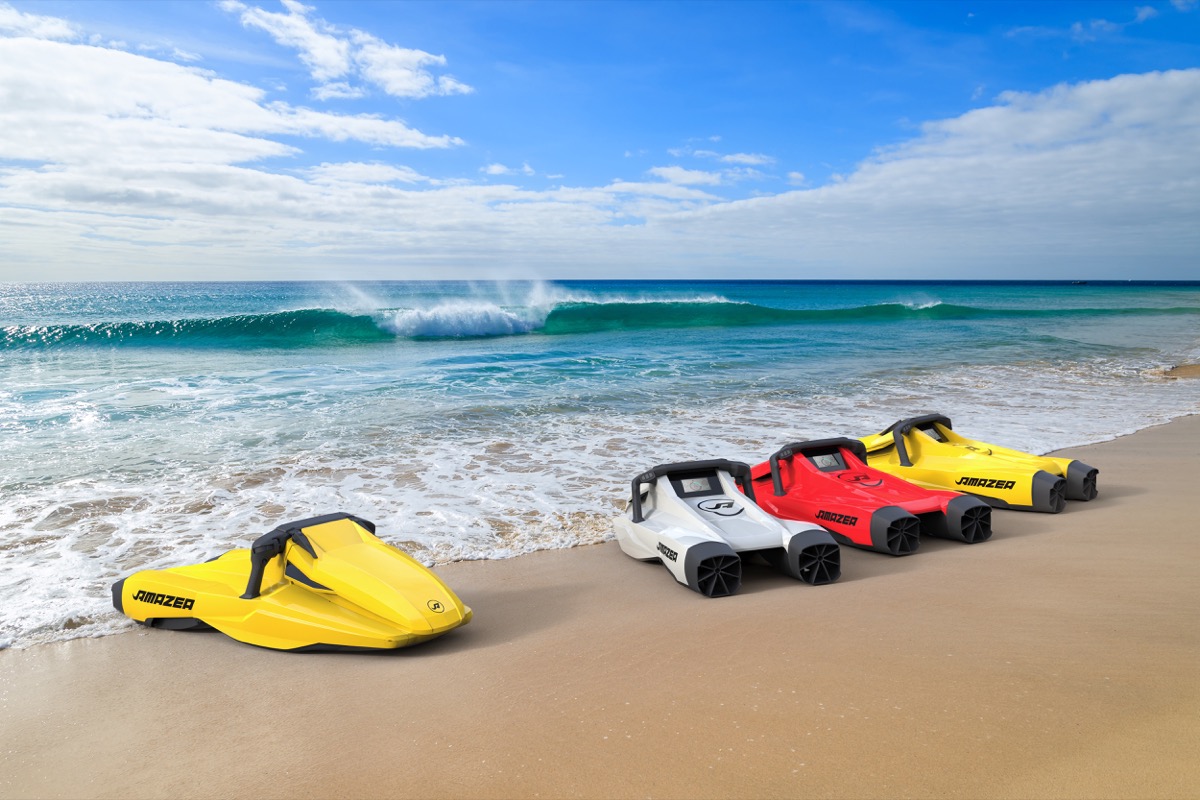
First Serially 3D Printed Underwater Scooter

3D Printing Media Network reports from boot Dusseldorf, where JAMADE Germany has just recently announced AMAZEA, the first serially 3D printed underwater scooter.

JAMADE Germany, which is “a company focused on the development and production of electrically powered sports equipment, developed and serially produced the AMAZEA underwater scooter using large format extrusion 3D printing technology. This marks a significant new era for digital mass production, as the AMAZEA will feature impressive 75% 3D printed parts, which actually make the device impossible (or very difficult) to produce by any other manufacturing method.”

AMAZEA’s body and front parts are produced “on three BigRep ONE large-format 3D printers using engineering-grade materials. With the exception of the Olli autonomous vehicle, this is the first time an end-use product this large is produced largely by 3D printing. The greater availability and lower costs of both large-format 3D printers and durable 3D printable materials is going to continue to enable a new generation of digital products.”

JAMADE Founder and Managing Partner Janko Duch explains: “AMAZEA is an industry-first breakthrough with the potential to redefine maritime vehicle technology and the consumer experience in water sports around the world. We opted for the BigRep ONE due to its cost efficiency, accuracy, and quality when compared to the extremely high investment for traditional tools, particularly in the first year’s lower quantity.”

AMAZEA “pulls the diver attached to it forward through the water, is an environmentally friendly, emission-free, and low-noise method of exploring marine life without disrupting the eco-system.”

Image and Quotes Courtesy of 3D Printing Media Network

Another 3D Printed Pavilion in Saudi Arabia

Dezeen reports on yet another pavilion getting 3D printed in Saudi Arabia. Only this time, it was created using sand.

This “sustainable sand-printed installation called Sandwaves” is located in Diryah, Saudi Arabia specifically and was created by architects Chris Precht and Arthur Mamou-Mani.

“The ribbon-like structure is 3D printed from sand and furan resin for use as street furniture at Diryah Season – a sports and entertainment event in the Al-Turaif District.”

The architects chose sand due to the fact “it is the most abundant natural material in the country, and it also responds to local building traditions.” With this 3D printed art installation, the pair of architects “hope to demonstrate the kind of innovation needed for our time in the building industry, and how nature and technology can work harmoniously together.”

As Mamou-Mani elaborates: “we both believe in the cradle-to-cradle approach to design, using materials which can go back to their natural state, leaving no trace.” To Precht, “building in an ecological way also means to build with local materials.” Mamou-Mani concludes: “we asked ourselves what is the most common raw material around, so sand came naturally to our minds.”

Sandwaves, which comprises “58 individual 3D printed elements which combine to form the continuous ribbon,” is the “largest sand-printed installation to date.” The architects collaborated with engineers at Format, “who used parametric design tools to generate the optimum shape and thickness of each piece.”

Image and Quotes Courtesy of Dezeen

SOL 3D Scanner Software Updated

3D Printing Industry reports Scan Dimension, a 3D scanner developer “with offices in the US and Denmark, has announced an update to the software for its SOL 3D scanner.”

With this update, Scan Dimension is providing “a number of new and improved features for the scanner, including improved scanning speed, and support for the latest macOS Catalina 10.15.”

Scan Dimension’s Head of Global Marketing, Global Scanning Rune Steenberg explains: “our engineers are continually advancing the SOL 3D scanner, and our customers will appreciate the faster scanning speed and support for macOS Catalina.”

“The latest update is making it easier than ever for SOL users to share, print, or save their projects for future use.”

Scan Dimension, a subsidiary of Global Scanning A/S, which is “a Danish manufacturer of scanning technologies. Global Scanning A/S primarily develops large-format scanning solutions for the computer-aided design (CAD), geographic information systems (GIS), reprographic products, copy services, and document archiving segments through its various companies,” is itself “a provider of 3D scanners, imaging, and realization technology, It provides its scanning solutions to customers in a number of industries, including construction, engineering, manufacturing, makers, and more.”

Scan Dimension introduced the SOL 3D scanner in April of 2019. “The system is designed to be easy to use and intuitive, intended for the everyday maker, technology enthusiast, and hobbyist.”

As Global Scanning A/S’s CEO Graham Tinn concludes: “we created the SOL scanner to make 3D scanning approachable for everyone. SOL empowers anyone to unleash their creativity and explore the infinite possibilities of 3D technology actualization.”

Image and Quotes Courtesy of 3D Printing Industry

LOCI: Fully 3D Printed Concept Car

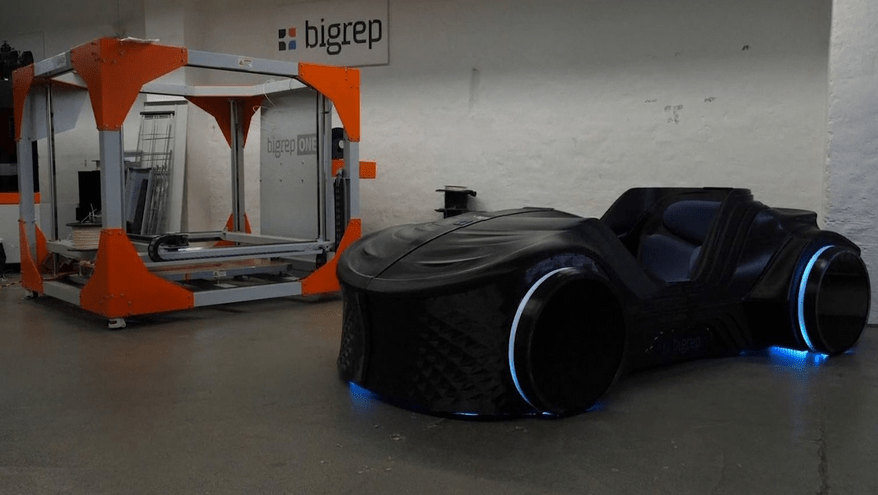
Local 12 reports on LOCI, a fully 3D printed concept car developed by Berlin-based BigRep. Every component, down to the tires, of this batmobile-looking concept car, have been 3D printed. Indeed, even the largest part of the car, which “measures 1000 x 600 x 700 mm, was fully 3D printed in one piece.”

While LOCI is only a prototype for now, BigRep believes their concept car “can point to the future where vehicles are created in large 3D printing machines instead of standard factories.”

Traditional forms of car manufacture are time-consuming, and entire factories have to be set to create a new car. However, with the wonders of 3D printing, this entire process can be revolutionized.

As BigRep’s Chief Innovation Officer Daniel Buening explains: “the vehicle consists of only 14 3D printed parts. The development, from an idea to a finished project, took only 12 weeks.”

BigRep also envisions further instant personal vehicle customization when 3D printing becomes a vital part of the automobile manufacturing process. Buening elaborates: “tall people could order cars with slightly more head space in the cockpit and people with disabilities could ensure their cars were more suited to their needs. This also means you can design and produce faster. You can print the parts you need on-demand. You can also look at the sustainability aspect: moving spare parts around the world won’t be needed if you produce them locally in the factories instead of flying them across the world.”

Image and Quotes Courtesy of Local 12 and BigRep

BAE Systems and Renishaw Form Alliance

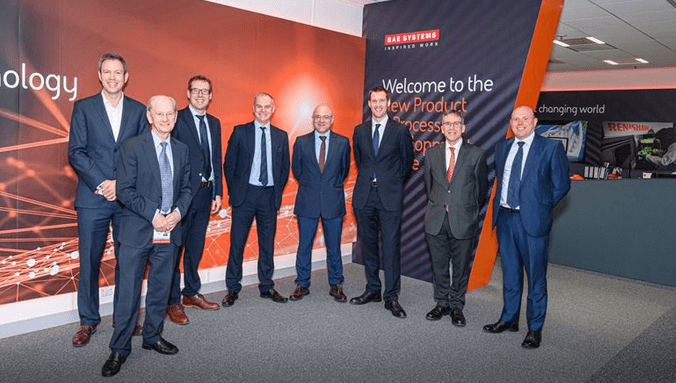
Lancashire Business View reports on a recent announcement made by BAE Systems and Renishaw. Apparently, they are forming an alliance with the ‘aim to advance 3D printing.’

“BAE Systems has signed a Memorandum of Understanding with manufacturing firm Renishaw which will see the two organizations work together to develop 3D printing for the defense sector” in the UK.

The defense giant BAE has a 1,000 sq. m. New Product Development & Process Development Center in Samlesbury, UK. This center “already hosts a number of Renishaw machines, and the new agreement will see them partner on research and development projects which improve performance, reduce costs, and speed up manufacturing processes through the use of 3D printing.”

Currently, BAE uses 3D printing “to make production standard components for the Typhoon fighter aircraft.” Additionally, BAE uses 3D printing “to create new technological concepts as part of a drive to deliver Tempest – a capable, affordable, exportable next generation future combat air system.”

Renishaw’s Chief Executive Will Lee concludes: “we already have a great relationship with BAE Systems, developed over many years through the application of our metrology products and have more recently worked with them on evaluating and understanding the performance envelope of our additive manufacturing systems. We are delighted they have been impressed with our systems, and this, together with our vision for AM development, has led to the strengthening of our collaboration.”

Image and Quotes Courtesy of Lancashire Business View

3D Printed Sensor-Operated Prosthetic Arm

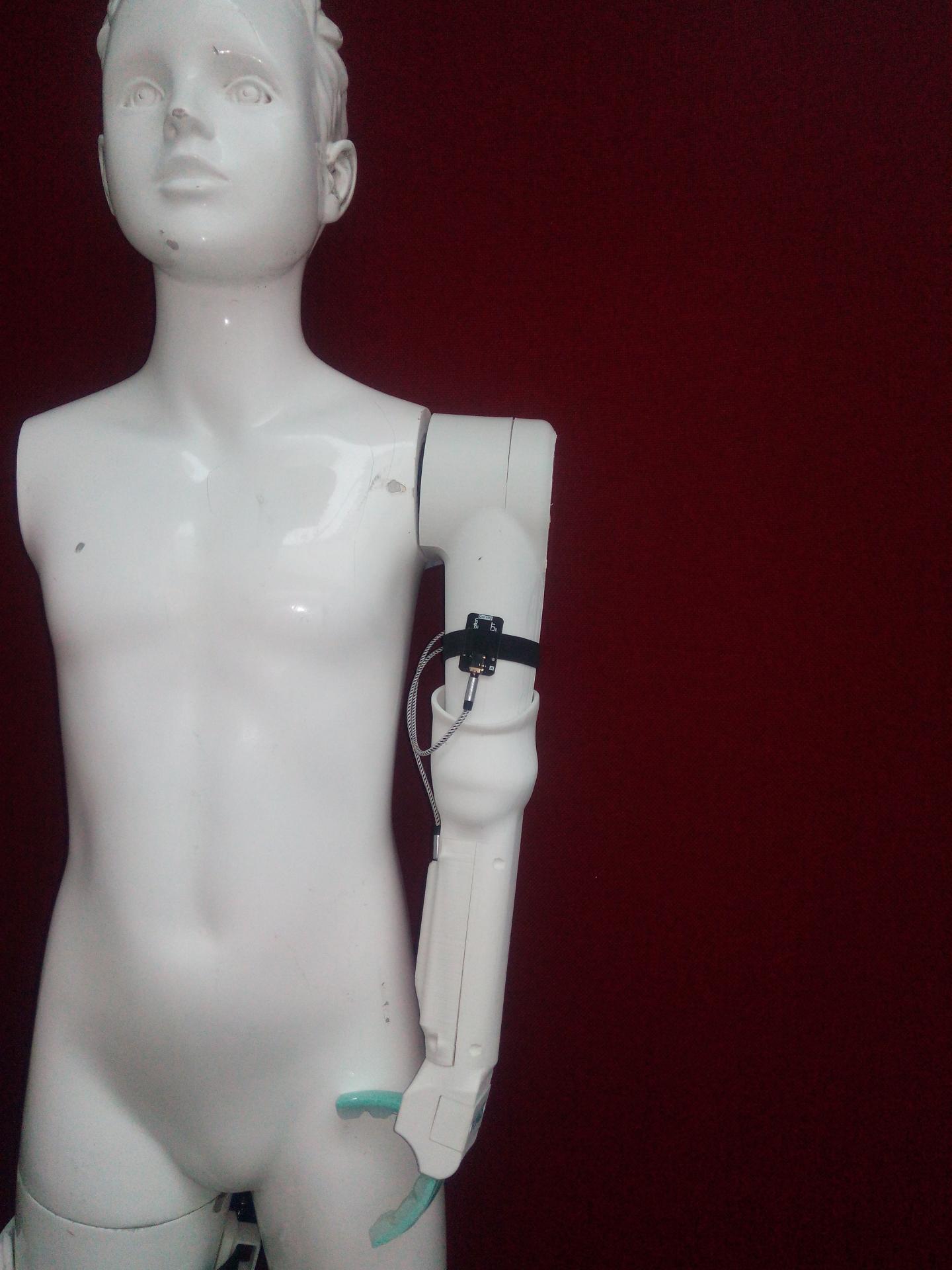
EurekAlert! reports from the University of Lincoln in the UK, where engineers have developed a 3D printed sensor-operated prosthetic arm prototype. This prototype was developed with toddlers in mind.

The prototype, “a lightweight device with soft grip fingers, uses an armband fitted with sensors to detect electrical signals naturally conducted by muscles. This would enable the toddler to grip and pick up objects in much the same way they would with a ‘natural’ arm.”

This sort of technology has been developed before, usually with adults in mind, but this is the first time toddlers have been the target demographic. “Previously, as well as being expensive to build, producing prostheses for children under two has been considered problematic as a child’s fast growth rates mean devices would need to be frequently replaced. By using 3D printing, the SIMPA (Soft-Grasp Infant Myoelectric Prosthetic Arm) is cheaper to produce than conventional prosthesis and can be custom made to the individual child’s required size without the need for traditional plaster casting techniques.”

Senior Lecturer in the School of Engineering at the University of Lincoln and Lead Engineer on this project Dr. Khaled Goher explains: “Many traditional active prosthetics are unsuitable for toddlers as they are very time consuming to construct and heavy. Our proposed system would utilize a seven-channel pediatric armband with motion sensors allowing infants to benefit from and become familiar with active prosthetics, with evidence showing the earlier the exposure, the more likely for the prosthetics to be accepted and used throughout life. So far, the device has been tested for grasp force and effectiveness using a range of everyday objects including toys, bottles and building blocks, but the next stage of the project is to test the prototype design on toddlers.”

Dr. Goher concludes: “we are planning to use algorithm training which would utilize games to engage with the toddlers and attune the system to the ‘grab’ signals from the armband.”

Image and Quotes Courtesy of EurekAlert!

The Future of Nano 3D Printing

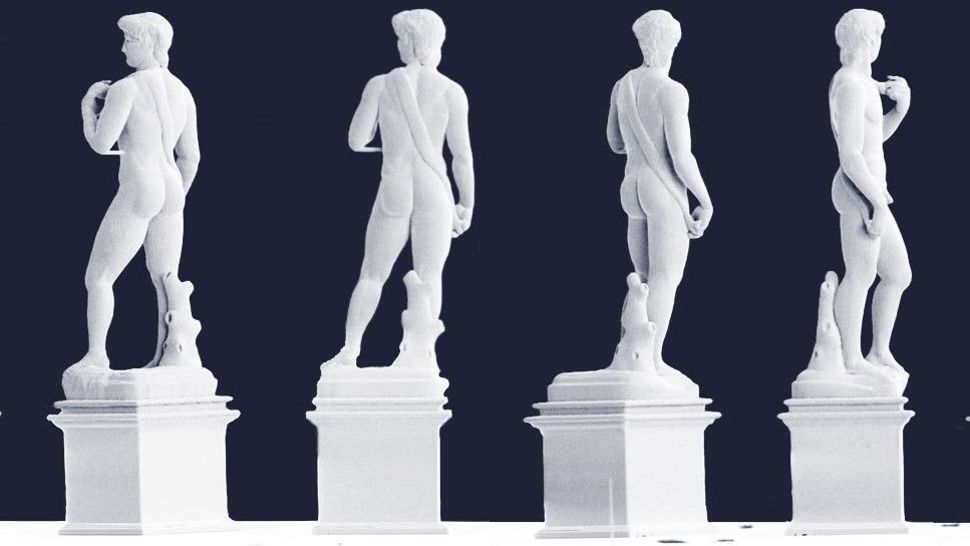
Tech Radar considers the future of nano 3D printing. Indeed, a miniature replica of Michelangelo’s statue of David has been 3D printed to demonstrate the technology’s future.

While the original statue of David stands at over 5 meters in height, this 3D printed recreation is tiny – only 1mm tall. And yet, it loses none of the piece’s clarity or precision. This stunning miniature was developed by researchers at ETH Zurich University, who “used a 3D printing method invented by Giorgio Ercolano, R&D process engineer at Exaddon.”

Additionally, the team “also created a second model of the statue, which was 10 times smaller (around 0.1mm), although it didn’t have nearly the same resolution and detailing.”

These miniature statues “were fashioned out of copper and printed in one single seamless process, with no requirement for supports or templates during printing…the larger David replica took some 30 hours to print, but the incredibly minuscule version took only 20 minutes to produce.”

The really interesting thing, though, is that these miniature Davids “are just a vehicle to highlight the potential of this technology, which could have major ramifications in the wider electronics and computing industry.”

“Exaddon reckons its CERES additive micro-manufacturing system could be used by manufacturers to connect computer chips together, or perform precise repairs on microelectronics systems.”

Giorgio Ercolano concludes: “our deep understanding of the printing process has led to a new way of processing the 3D computer model of the statue and then converting it into machine code. This is what makes the new David statue so extraordinary. This object has been sliced from an open source CAD file and afterwards was sent directly to the printer. This slicing method enables an entirely new way to print designs with the CERES additive micro-manufacturing system.”

Image and Quotes Courtesy of Tech Radar

“Most Realistic” 3D Printed Plant Based “Steak”

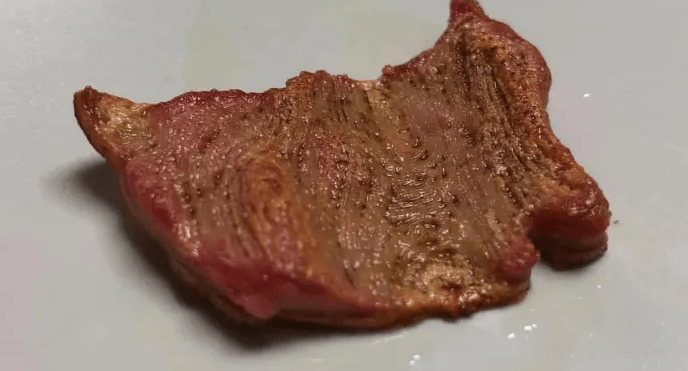
Plant Based News reports on Spanish startup NovaMeat, which has apparently developed the “most realistic” 3D printed plant based “steak.”

“The vegan meat extrudes ingredients such as pea, seaweed, and beetroot juice into fine fibers” in order to replicate muscle tissue. NovaMeat aims to launch their additively manufactured meat “in select restaurants in Spain and Italy first and scale up on production next year.”

NovaMeat’s 3D printed plant based “steak” currently weighs 50 grams and is priced at $1.50, “but is predicted to lower even more in price as the company aims to use a plant capable of producing 50kg of vegan ‘steak’ per hour in 2021.”

As NovaMeat’s Founder Giuseppe Scionti explains: “I started with steak because it is the holy grail of plant based ‘meat.’ We are still experimenting with the taste.”

Indeed, The Good Food Institute (GFI)’s Director of Science and Technology David Welch supports NovaMeat: “to meet the growing demand for ‘meat’ with more sustainable plant based products, we need to deliver the taste, texture, and appearance carnivores crave.”

“NovaMeat’s bioprinting based technology provides a flexible and tunable method of producing plant based ‘meat’, with the utility to create different textures from a wide variety of ingredients all within a single piece of ‘meat.’”

Image and Quotes Courtesy of Plant Based News

3D Printed Mollusk-Inspired Armor

3D Printing Industry reports on a fascinating experiment carried out at Virginia Polytechnic Institute and State University (VT).

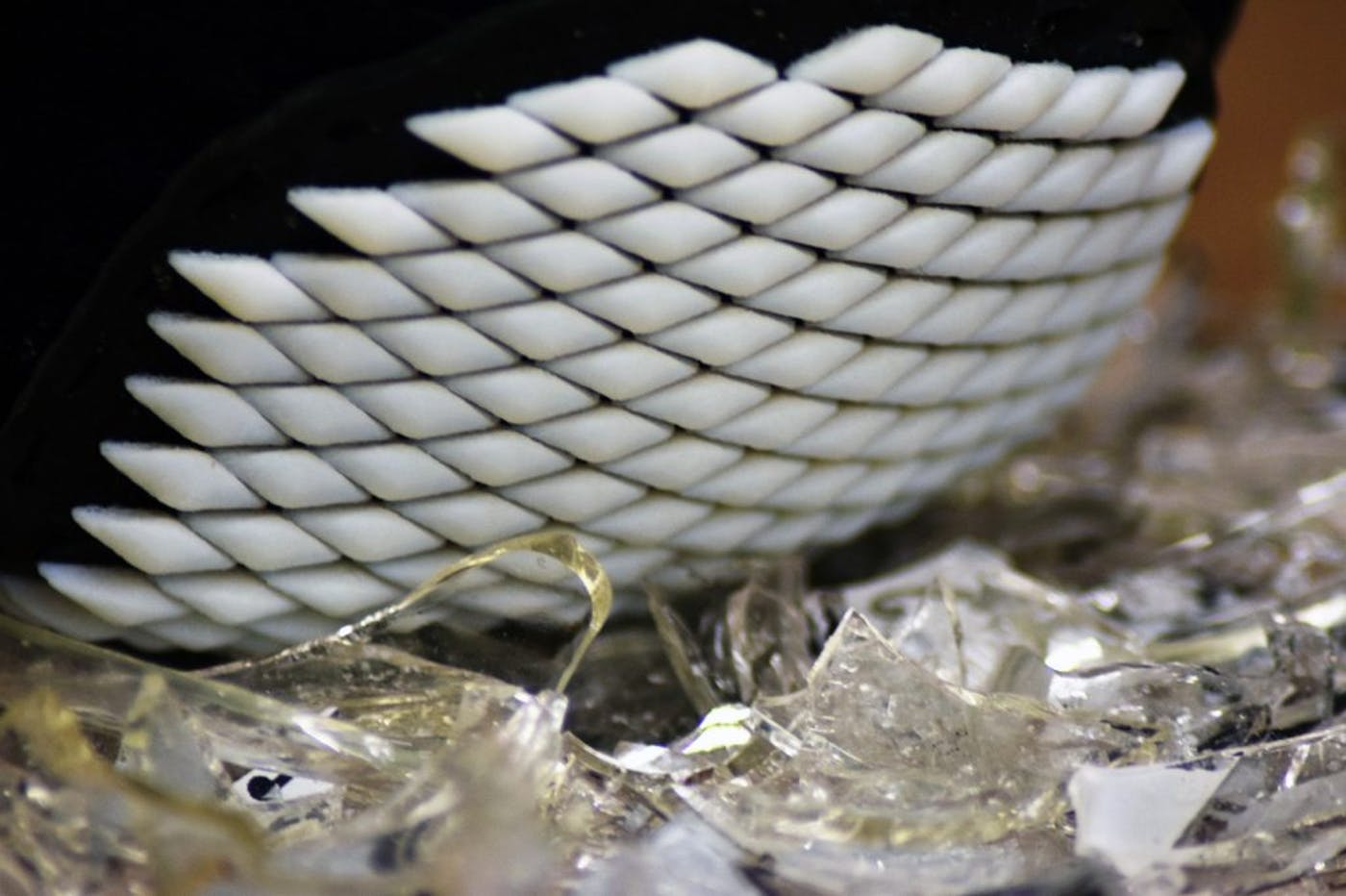
Associate Professor at the Department of Mechanical Engineering Ling Li “has developed 3D printed flexible scaled armor inspired by the chitons, a group of marine mollusks.” With this study, Professor Li’s team “sought to improve on the rigid structures used in man-made armors, which typically compromise on flexibility and maneuverability. Thus, using parametric computational modeling and multi-material 3D printing, flexible, scaled, ceramic armor components were created.”

Professor Li explains the choice of armor inspiration: “most mollusks have a single rigid shell, such as the abalone, or two shells, such as clams, but the chiton has eight mineralized plates covering the top of the creature and around its base, it has a girdle of very small scales assembled like fish scales, providing flexibility as well as protection…we studied the [girdle scales] in a very detailed way. We quantified its internal microstructure, chemical composition, nano-mechanical properties, and three-dimensional geometry. We studied the geometrical variations of the scales across multiple chiton species, and we also investigated how the scales assemble together through 3D tomography analysis.”

The team was therefore able to develop “a parametric 3D modeling methodology replicating the geometry of individual scales. This was used to assemble individual scale units on flat or curved substrates, which could then be additively manufactured.”

Professor Li concludes: “with these physical prototypes of controlled specimen geometries and sizes, the team conducted direct mechanical testing on them with controlled loading conditions. Following these tests, [the team was able to] conclude the dual protection-flexibility performance of the biological armor system would be suitable for the production of 3D printed protective gear such as kneepads.”

Image and Quotes Courtesy of 3D Printing Industry

Design a site like this with WordPress.com
Get started